Økologi og bærekraftig mobilitet
Mobility is changing faster than at any point since the invention of the motor car. Across the United Kingdom, the way we move is being reshaped by two powerful forces: the shift towards electric vehicles and the rise of connected car technology. Together, they offer a genuine opportunity to cut emissions, reduce air pollution in our towns and cities, and make everyday travel cleaner and smarter. This page brings together the essential ideas behind ecology and sustainable mobility, explaining the key concepts in plain language and helping you make sense of a topic that can sometimes feel overwhelming.
Whether you are considering your first electric car, curious about how connected vehicles work, or simply trying to reduce the environmental footprint of your daily journeys, the sections below cover the fundamentals you need to know.
What Sustainable Mobility Really Means
Sustainable mobility is about moving people and goods in ways that minimise harm to the environment, both now and for future generations. It covers everything from the energy a vehicle consumes to the materials used to build it, and even the infrastructure that supports it.
In the UK context, sustainable mobility is closely tied to national commitments to reach net zero greenhouse gas emissions. Transport remains one of the largest sources of emissions in the country, which is why the transition away from petrol and diesel cars has become a central pillar of environmental policy. Local authorities, from London to Glasgow, are also playing their part through measures such as Clean Air Zones, low emission zones and investment in cycling infrastructure.
It is worth remembering that sustainability is not only about the vehicle itself. A truly sustainable journey considers:
- The energy source powering the vehicle, such as renewable electricity rather than fossil fuels.
- The efficiency of the journey itself, including route, speed and vehicle occupancy.
- The lifecycle impact of the car, from manufacturing and battery production to recycling at end of life.
- Alternatives to driving altogether, such as public transport, walking, cycling and shared mobility.
Electric Vehicles: The Heart of Greener Driving
Electric vehicles, often called EVs, have moved from niche curiosity to mainstream choice on British roads. Instead of an internal combustion engine burning petrol or diesel, an EV uses an electric motor powered by a rechargeable battery pack. This fundamental difference brings several environmental and practical advantages.
Why Electric Cars Are Cleaner
The most obvious benefit is the absence of tailpipe emissions. An electric car driving through Birmingham or Manchester produces no nitrogen oxides or particulates at street level, which directly improves urban air quality. Air pollution is linked to respiratory and cardiovascular problems, so cleaner streets have a tangible impact on public health.
Of course, electricity has to come from somewhere. The carbon footprint of an EV depends partly on how the electricity powering it is generated. The good news is that the UK electricity grid has dramatically reduced its reliance on coal, with wind power in particular now contributing a substantial share of generation. As the grid gets greener, every electric car charging from it automatically becomes cleaner too, without the owner changing anything.
Types of Electric Vehicles
Not all electric vehicles are the same, and understanding the differences helps you choose wisely:
- Battery Electric Vehicles (BEVs) run entirely on electricity stored in a large battery, with no petrol engine at all.
- Plug-in Hybrids (PHEVs) combine a smaller battery with a conventional engine, offering electric driving for shorter trips and petrol for longer journeys.
- Mild Hybrids use a small electric motor to assist a petrol or diesel engine but cannot drive on electricity alone.
For most drivers with access to home charging, a full battery electric vehicle offers the lowest running costs and the smallest environmental footprint. For those who regularly drive very long distances without reliable charging, a plug-in hybrid can serve as a transitional option.
Understanding Batteries and Range
Battery technology is the heart of every electric car. Modern lithium-ion batteries offer ranges that comfortably cover typical daily driving, with many models capable of well over two hundred miles on a single charge. Range anxiety, once a major barrier, is fading as both vehicles and the public charging network improve.
Think of an EV battery a little like the fuel tank of a conventional car, but with an important difference: most EV drivers recharge at home overnight, in much the same way as you charge a mobile phone. This means starting each day with a full battery, and public rapid chargers along motorways and in towns act as a top-up for longer trips.
Charging Infrastructure in the UK
Charging is the aspect of electric car ownership that raises the most questions. The UK charging network has expanded considerably, with public chargepoints now found at supermarkets, car parks, service stations and on residential streets.
Charging Options Explained
There are three main levels of charging speed to be aware of:
- Slow charging uses a standard domestic socket or a small home wallbox and typically takes several hours or overnight, ideal for regular daily top-ups.
- Fast charging, usually found at workplaces and public car parks, delivers a meaningful charge in a couple of hours.
- Rapid and ultra-rapid charging, located at motorway services and dedicated charging hubs, can add substantial range in twenty to forty minutes.
For most people, the pattern is simple: charge at home during off-peak hours when electricity is cheapest and often greenest, and use public chargers only when needed. Off-peak tariffs designed for EV owners can significantly reduce running costs, and charging overnight often coincides with periods when the grid has a higher proportion of renewable energy available.
Charging Without a Driveway
Not everyone has off-street parking, and this remains one of the genuine challenges of the transition. Solutions are developing, including on-street residential chargepoints, community charging schemes and increasing availability of destination chargers at leisure centres, pubs and supermarkets. If you do not have a driveway, it is worth researching the provision in your local area before committing to a fully electric vehicle.
Connected Cars: Technology in Service of Sustainability
A connected car is a vehicle equipped with internet connectivity, allowing it to communicate with other vehicles, infrastructure and online services. While this may sound like a convenience feature, connectivity plays a surprisingly important role in sustainable mobility.
How Connectivity Reduces Emissions
Connected technology helps make every journey more efficient:
- Smart routing uses live traffic data to avoid congestion, and idling in traffic is one of the biggest sources of wasted fuel and unnecessary emissions.
- Eco-driving assistance analyses your driving style and suggests smoother acceleration and braking, which conserves energy, particularly valuable in an EV where efficient driving extends range.
- Smart charging allows an electric car to communicate with the electricity grid, charging when renewable generation is high or electricity is cheap, and even feeding energy back to power your home when needed.
- Predictive maintenance detects mechanical issues early, keeping the vehicle running efficiently and extending its useful life, which is itself a sustainability benefit.
Consider a simple example: a connected EV in Bristol can automatically schedule its charging session for the early hours of the morning, when wind generation is often strongest and tariffs are lowest. The owner wakes up to a full battery that cost less and carried a smaller carbon footprint, all without lifting a finger.
Vehicle-to-Grid and the Energy Ecosystem
One of the most exciting developments is vehicle-to-grid technology, often abbreviated to V2G. The idea is elegantly simple: an electric car battery is a large store of energy, and when the car is parked, that energy can be shared. During peak demand, a V2G-capable vehicle can return electricity to the home or grid, and recharge when supply is abundant. This turns parked cars into part of the national energy solution, smoothing demand and making better use of renewable energy.
The Lifecycle Question: Are Electric Cars Truly Green?
A fair and frequently asked question is whether electric cars are genuinely better for the environment once manufacturing is taken into account. Producing batteries is energy-intensive, and this does give EVs a larger manufacturing footprint than equivalent petrol cars.
However, the full picture tells a consistent story. Over its lifetime, an electric vehicle in the UK typically produces significantly lower total emissions than a comparable petrol or diesel car, even after accounting for battery production and grid electricity. The gap widens further as the grid decarbonises and as battery recycling improves. Manufacturers are increasingly committed to second-life uses for batteries, such as stationary energy storage, before materials are recovered and reused in new cells.
It is also worth considering longevity. Electric drivetrains have fewer moving parts than combustion engines, which can translate into less wear and longer service life with simpler maintenance. Keeping a vehicle on the road for longer is one of the most effective ways to reduce its overall environmental cost.
Practical Steps Towards More Sustainable Driving
Sustainable mobility is not an all-or-nothing proposition. There are meaningful actions available at every level, whether or not you currently own an electric car:
- Assess your real driving needs. Many drivers discover that their typical journeys are short and easily covered by an EV, or even by walking, cycling or public transport.
- Drive efficiently. Smooth acceleration, moderate speeds and proper tyre pressure reduce energy consumption in any vehicle.
- Combine journeys. A single well-planned trip uses less energy than several short ones with a cold engine or battery.
- Consider shared mobility. Car clubs, carpooling and improved public transport options reduce the total number of vehicles on the road.
- If buying, research charging access first. Your home charging situation and local infrastructure should shape your choice more than headline range figures.
To illustrate with a hypothetical case: imagine a commuter in Leeds who drives eighteen miles each way to work. Switching to an electric car charged overnight on an off-peak tariff could cut both their fuel costs and their personal carbon emissions dramatically, while a weekend trip to the Yorkshire Dandes, planned with a single stop at a rapid charger, removes any practical difficulty.
Frequently Asked Questions
How long does an electric car battery last?
Modern EV batteries are designed to last the life of the vehicle, with most manufacturers offering warranties covering eight years or a substantial mileage. Degradation is gradual, and many early electric cars still retain most of their original range after many years of use.
Is an electric car cheaper to run?
For most drivers, yes. Electricity per mile is generally cheaper than petrol or diesel, especially with off-peak home charging, and maintenance costs tend to be lower due to fewer moving parts. The purchase price is often higher, though this gap continues to narrow and running costs frequently offset it over ownership.
Do connected cars compromise my privacy?
Connected vehicles do collect data about driving and location, which is a legitimate consideration. Reputable manufacturers publish clear privacy policies, and you can usually review and manage data settings. Understanding what your car collects is a sensible step for any owner.
What is the greenest way to charge an EV?
Charging overnight on an off-peak tariff is usually both the cheapest and cleanest option, as renewable generation often forms a larger share of the grid mix. Some tariffs are specifically backed by renewable electricity guarantees, offering further assurance.
Moving Forward with Confidence
The transition to sustainable mobility is one of the most significant changes in modern transport, and it is happening all around us, from quiet electric cars gliding through city centres to smart chargepoints appearing on suburban streets. Understanding the basics of electric and connected vehicles puts you in a strong position to make informed choices that suit your circumstances, your budget and your environmental goals.
You do not need to change everything at once. Every efficient journey, every considered vehicle choice and every small shift in habits contributes to cleaner air and a lower-carbon future. The pages in this category explore each of these topics in greater depth, giving you the knowledge to navigate the road ahead with confidence.
Hvordan kan smarte biler bidra til å redusere CO2-utslippene fra transportsektoren?
Transportsektoren står for en betydelig andel av verdens CO2-utslipp, og innovative løsninger er nødvendige for å møte klimautfordringene. Smarte biler representerer et lovende teknologisk fremskritt som kan spille en avgjørende rolle i å redusere utslippene. Ved å kombinere avansert teknologi,…
Lire la suite
Overgangen til elektriske kjøretøy er en nødvendighet for å møte klimamålene
Transportsektoren står for en betydelig andel av de globale klimagassutslippene, og overgangen til elektriske kjøretøy er en av de mest lovende løsningene for å redusere dette fotavtrykket. Mens teknologien bak elektriske biler har gjort enorme fremskritt de siste årene, står…
Lire la suite
Bli en del av bildelingsrevolusjonen for å redusere biltrafikk og CO2-utslipp
Bildeling har blitt en viktig del av den grønne mobilitetsrevolusjonen i Norge. Denne innovative tilnærmingen til transport lover ikke bare å redusere CO2-utslipp, men også å løse problemer knyttet til overbelastede veier og begrenset parkeringsplass i byene. Med stadig flere…
Lire la suite
Bærekraftige transportløsninger: nøkkelen til fremtidens byer med lavt karbonavtrykk
Norske byer står overfor en betydelig utfordring: å redusere klimagassutslipp fra transportsektoren samtidig som befolkningen vokser og mobilitetsbehovene øker. Bærekraftige transportløsninger er ikke lenger en luksus, men en nødvendighet for å skape levelige, effektive og miljøvennlige urbane områder. Fra elektriske…
Lire la suite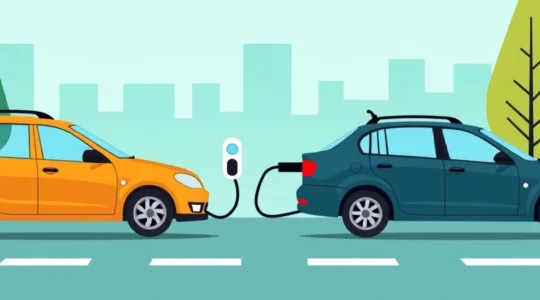
Hva er de viktigste fordelene med energieffektive kjøretøy for miljøet?
Transportsektoren står for en betydelig andel av globale klimagassutslipp og lokale miljøutfordringer. Energieffektive kjøretøy representerer et viktig skritt mot en mer bærekraftig fremtid. Fra reduserte CO2-utslipp til forbedret luftkvalitet i byene, tilbyr disse innovative transportløsningene en rekke miljømessige fordeler. La…
Lire la suite